
Why FRP Solutions Are Becoming Essential in Sustainable Lithium Extraction
Introduction
Lithium has become one of the most important materials in the clean energy movement. It powers the batteries behind electric vehicles, energy storage systems, and many of the technologies helping industries move toward a lower-carbon future. But while demand for lithium keeps climbing, extracting it efficiently is no easy task.
Lithium processing often takes place in tough environments where equipment is exposed to harsh chemicals, abrasive materials, and constant pressure. That means the systems used in these facilities need to be reliable, durable, and resistant to corrosion. This is where FRP solutions come into the picture. Fiberglass-reinforced plastic tanks and piping systems are proving to be a smart choice for lithium extraction projects that want to balance performance, cost, and sustainability.
Growing Demand Is Raising the Stakes
The lithium industry is expanding quickly, and that growth is putting new pressure on extraction operations. As demand rises, companies need equipment that can keep up without breaking down. In many cases, the challenge is not just about capacity. It is also about durability. The chemicals and brines involved in lithium extraction can be incredibly harsh on traditional materials, leading to corrosion, leaks, and frequent maintenance issues.
For operators, that creates a real problem. Every repair takes time, and every shutdown affects productivity. Over the life of a project, those interruptions can become expensive. That is why more companies are looking for materials that can perform consistently in demanding conditions.
Why FRP Works So Well
FRP systems are especially well-suited to lithium extraction because they are built to resist corrosion. Unlike metal systems, which can deteriorate when exposed to aggressive chemicals, fiberglass-reinforced plastic holds up well in these environments. That makes it a practical choice for tanks, piping, and other process equipment that need to last.
This corrosion resistance gives operators a major advantage. It helps extend the life of equipment, reduces the need for replacements, and lowers the risk of unexpected breakdowns. In a busy industrial setting, that kind of reliability is incredibly valuable. It means the operation can stay focused on production instead of constantly dealing with maintenance problems.
A Better Fit for Long-Term Costs
One of the biggest benefits of FRP is not just how it performs today, but how it performs over time. Upfront cost is always part of the conversation, but the real value of equipment shows up in the long run. A cheaper system that wears out quickly can end up costing far more than a durable one that lasts.
FRP helps improve the economics of lithium extraction by reducing maintenance needs and extending service life. Fewer repairs mean less downtime, and less downtime means better productivity. It also means fewer materials are needed for replacements, which can support more sustainable operations overall. For companies trying to build both efficient and responsible processes, that is a strong advantage.
Flexible Enough for Different Applications
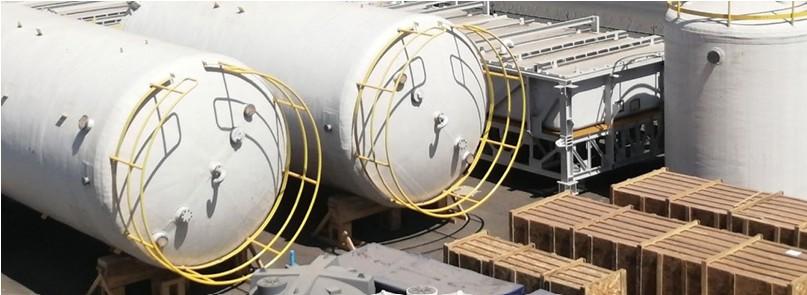
Another reason FRP stands out is its flexibility. No two lithium projects are exactly the same, and the equipment used in one facility may not be right for another. FRP tanks can be designed in different sizes and configurations, making them suitable for a wide range of uses. They can be used for settlers, clarifiers, chemical storage, ion exchange vessels, pressure vessels, and more.
That versatility matters because it allows engineers to design systems around the process instead of forcing the process to fit a standard piece of equipment. The same is true for piping. FRP piping can handle both low-pressure and high-pressure applications, and it can be used for brines, chemicals, water, and abrasive fluids. That makes it a dependable option for many different parts of a lithium extraction facility.
Supporting Smarter, More Sustainable Operations
Sustainability is about more than just the final product. It is also about how that product is made. In industrial operations, sustainability often comes down to using materials and systems that last longer, waste less, and require fewer resources over time. FRP fits that goal well.
Because FRP systems are durable and corrosion-resistant, they help reduce the need for frequent equipment replacement. That means fewer raw materials are consumed and less waste is created. It also means fewer disruptions to the process, which can improve efficiency across the board. For lithium producers who want to align with sustainability goals without sacrificing performance, FRP offers a practical path forward.
Built for the Realities of the Field
One of the things that makes FRP especially useful is how well it handles the realities of industrial work. Lithium extraction sites can be tough places to operate. Equipment has to withstand not just chemicals, but also weather, pressure, solids, and changing process conditions. Systems that are hard to maintain or prone to failure can slow everything down.
FRP helps take some of that pressure off. Its combination of strength, chemical resistance, and design flexibility makes it a reliable choice in environments where other materials may struggle. It also supports easier installation and better project execution when systems are prefabricated and engineered with the site in mind. That can make a big difference during construction and startup.
Conclusion
Lithium will continue to play a major role in the future of energy, but producing it responsibly takes the right infrastructure. Extraction facilities need equipment that is durable, flexible, and able to stand up to harsh chemical environments without constant maintenance.2
That is why FRP solutions are becoming such an important part of the conversation. With their corrosion resistance, long service life, and adaptability, fiberglass-reinforced plastic tanks and piping systems help lithium projects operate more efficiently while supporting sustainability goals. In an industry where every performance advantage matters, FRP is a smart and future-ready choice.